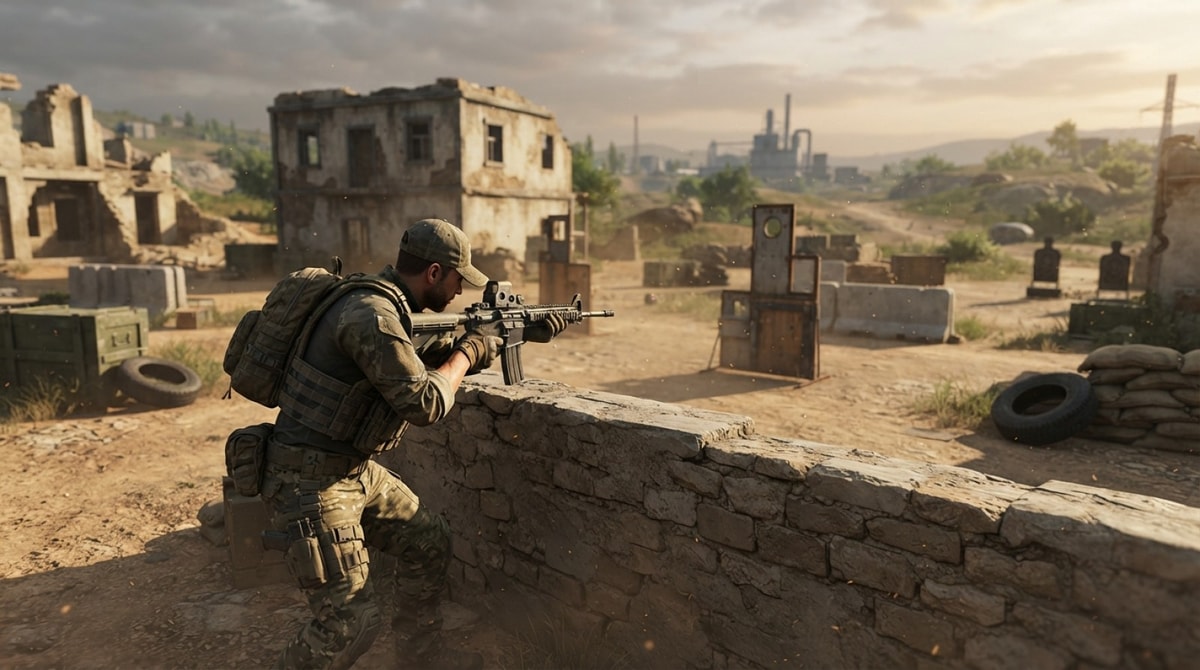
To improve in PUBG Mobile, train three connected skills: crosshair control, purposeful movement, and faster decisions about fights, cover, and rotations. Playing more matches helps only when each session has a clear focus.
Your results also depend on factors outside your control, including device performance, connection stability, teammates, and luck with early loot. You cannot remove those variables, but you can reduce their effect by building repeatable habits and reviewing why each fight was won or lost.
What Is Really Holding You Back in PUBG Mobile?
A player can lose a fight because of poor aim, a late movement decision, or an exposed position. That is a skill problem you can address. A dropped connection, inconsistent frame delivery, an unexpected third party, or an unfavorable weapon can affect the same fight for reasons you cannot fully control. Separate these causes after each match instead of blaming luck for every defeat. If the enemy had better cover and you pushed without information, the lesson concerns decision-making. If your crosshair stayed below the target, the lesson concerns aim.
Core mechanics shape the result before the first shot. Erangel, Miramar, Sanhok, Vikendi, and Livik have different terrain and loot patterns, so a landing choice that works on one map may create a poor rotation on another. The shrinking safe zone rewards early movement and usable cover. Weapon types also demand different habits: SMGs and shotguns suit close fights, while ARs, DMRs, and bolt-action snipers require more control over distance, recoil, and exposure.
Mindset Mistakes That Slow Your Progress
Playing without a purpose keeps mistakes invisible. Choose one focus for a session, such as keeping the crosshair at head height or reaching cover before healing. After a poor fight, identify the first avoidable error, not only the final knock. Review a replay or remember the sequence: position, information, movement, then shots. This turns frustration into a specific adjustment. Change one habit at a time so you can tell whether it actually helps.
How PUBG Mobile Mechanics Shape Every Match
Use the map and safe zone as decision tools rather than background details. Ask whether your route has cover, whether your squad can reach the next zone safely, and whether your weapon combination fits the distance you are choosing. A player who survives longer through better positioning can create more chances to fight, while a player who takes every visible target may collect damage without improving rank performance. Mechanics reward preparation before aim is tested.
How Should You Set Sensitivity and Controls for Better Aim?
There is no universal sensitivity setup for PUBG Mobile because screen size, touch response, frame consistency, grip, and personal control style differ. Start in the training ground, choose one weapon, and adjust only one slider at a time. Camera sensitivity controls how quickly you look around and move the crosshair before firing. ADS sensitivity affects movement while aiming down sights. Test both across no-scope, red dot or holographic, 2x, 3x, 4x, 6x, and 8x settings instead of copying a single number for every scope.
- Test camera movement first: track a fixed target and turn between nearby angles. Lower the value if small movements feel jumpy; raise it if turning feels slow.
- Test ADS separately: fire short bursts and watch whether the sight passes the target or stops behind it. Make small changes, then repeat the same drill.
- Keep the device constant: do not judge a setting after switching phones, grips, or performance conditions. Adjust gradually for the device you actually use.
Tuning Scope Sensitivity Step by Step
Begin with no-scope and red dot aiming because close and medium-range fights expose control problems quickly. Move to 2x and 3x, then test longer scopes only after your basic tracking feels predictable. Use the same target and burst length for every comparison. If recoil control feels comfortable but turning onto a target is slow, change camera sensitivity rather than ADS. If the initial turn is fine but the sight drifts during a burst, adjust ADS instead. Record each change and give it several practice attempts before judging it.
Customising Control Layout and Gyroscope
Place movement, aim, fire, crouch, and prone buttons where your fingers reach them without covering the view. Larger buttons can help if you miss taps, while a more compact layout may suit players who use several fingers. PUBG Mobile allows these positions and sizes to be customised, so copy the layout into a test profile before making major changes.
Gyroscope aiming can help players make fine corrections by tilting the device, especially during recoil control, but it adds another input to learn. Beginners who already miss touch inputs may be safer starting with touch controls alone. If you enable gyroscope, use it first for small corrections rather than full turns. Keep a stable profile for a week, note the scopes or buttons that cause problems, and update the profile weekly instead of changing values after every match.
What Daily Training Routine Really Improves Your Aim?
A short, repeatable routine works better than spending a long session repeating random drills. In PUBG Mobile, divide practice between the Training Ground, where you can isolate weapon control, and fast Arena matches, where you must react to real opponents.
Use the Training Ground to Learn Weapons
Start with 10 to 15 minutes in the Training Ground. Pick one assault rifle, one SMG, and a weapon you rarely use, then fire at several distances. Watch how the sight rises during a sustained burst and practise pulling the aim down without changing your sensitivity. Test common attachments as well, because recoil control can feel different when the weapon setup changes. Add movement to the drill: strafe left and right, peek from cover, crouch briefly, and change your angle while shooting. The target is not a perfect score. It is a repeatable motion that feels controlled.
Practise Close-Range Fights in Arena Modes
Use Team Deathmatch or another Arena mode for 10 to 20 minutes after weapon practice. These modes give you repeated close-range fights, so focus on keeping the crosshair near chest level, reacting to an enemy appearing from a new angle, and moving instead of standing still while firing. Choose one measurable task per session, such as winning more first shots or surviving three engagements without panic-firing.
Review the routine once a week. Replace drills that have become dull with a small challenge, such as using a different weapon class, practising only hip-fire at close range, or tracking how often you win the opening exchange. Weekly changes keep practice useful without turning every session into unstructured play.
How Do You Choose Smart Landings and Rotations?
A sensible landing plan balances equipment, information, and survival time. A hot drop can provide immediate fights and fast lessons, but landing there alone or without a clear squad plan often ends the match before you learn anything. Medium-traffic areas usually give beginners more time to collect usable gear, check nearby movement, and prepare for the first rotation.
Pick Landing Spots That Fit Your Skill Level
Read the plane path before jumping and mark a primary location plus a backup spot. On Erangel or Miramar, choose a busier area if your goal is to practise early fights with teammates nearby. Choose a quieter compound if you are still learning looting routes, weapon handling, or basic positioning. Your choice should match the skill you are trying to build, not a fixed idea that every match must begin with the same drop. A backup marker prevents a late jump from turning into a desperate landing in an exposed field.
Follow Core Rotation Rules on Classic Maps
After looting, move with the safe-zone edge when it gives you cover and enough time. Avoid crossing open fields unless the route is necessary; use buildings, ridgelines, rocks, and vehicles to break long sightlines. Do not follow a rigid route after hearing several gunshots or noticing enemy movement near your planned path. Pause, mark a safer angle, and let that information change the rotation. The best route is the one that preserves options while keeping your squad together.
- Mark a primary landing area and a backup before jumping.
- Leave early enough to reach the zone with cover rather than sprinting across open ground.
- Change direction when gunshots or enemy movement reveal a more dangerous path.
Which Fighting and Decision Mistakes Must You Stop Making?
Many lost fights begin before the first bullet. Rushing alone into a full squad gives the enemy information, crossfire, and time to focus you. Before pushing, check whether teammates can support the angle, whether you know the enemy count, and whether you have a retreat route. If those answers are unclear, hold cover and gather information instead of forcing the engagement.
Fix Costly Engagement Errors in Gunfights
Poor cover usage is another common problem. Peeking from the same side repeatedly lets an opponent pre-aim your position, especially when the angle is visible from a distance. Change the peek direction, crouch only when it helps the sightline, and relocate after dealing damage. Use strafing during short exchanges, but do not move so widely that your own aim becomes unstable. A missed opportunity is often cheaper than an unnecessary push into a crossfire.
Avoid Bad Resource and Priority Decisions
Check your equipment before chasing another fight. Ignoring armour, carrying too little healing, or leaving useful throwables unused reduces your options. Frag grenades can pressure enemies behind cover, while smoke can help a squad cross or revive when the route is otherwise exposed. Match the weapon to the engagement: an SMG or shotgun suits tight spaces, while an assault rifle, DMR, or bolt-action sniper serves different distances. Do not play only for kills. In Ranked Classic matches, survival, placement, kills, and squad contribution can all affect performance, so secure a safe position when a risky chase offers little value.
How Do You Coordinate With Your Squad and Set Realistic Goals?
Good squad play starts with a simple plan, not constant chatter. Before landing, use voice chat or quick messages to agree on the drop area, the first regroup point, and who will watch the surrounding buildings. After landing, report enemy positions and missing supplies in short, specific calls.
Use Basic In-Match Communication That Helps
Assign rough roles according to strengths. A scout can check routes, a sniper can watch longer sightlines, and an entry fragger can lead a coordinated push, but roles should remain flexible when the equipment or terrain changes. Say what you know and what you need: enemy count, direction, distance, or a request for smoke. This gives teammates information they can act on instead of vague warnings.
Set Progress Milestones Without Unrealistic Promises
Track goals that you can influence each week. Aim for a longer average survival time, more planned engagements, fewer solo pushes, or better use of cover rather than focusing only on rank. Review one mistake after each session and choose one adjustment for the next session. No fixed promise can guarantee a fast climb to a top tier. Advancement depends on consistency, match decisions, and learning from errors, so measure progress over several sessions instead of judging one bad match.


Comments
No comments yet. Be the first to share your thoughts.