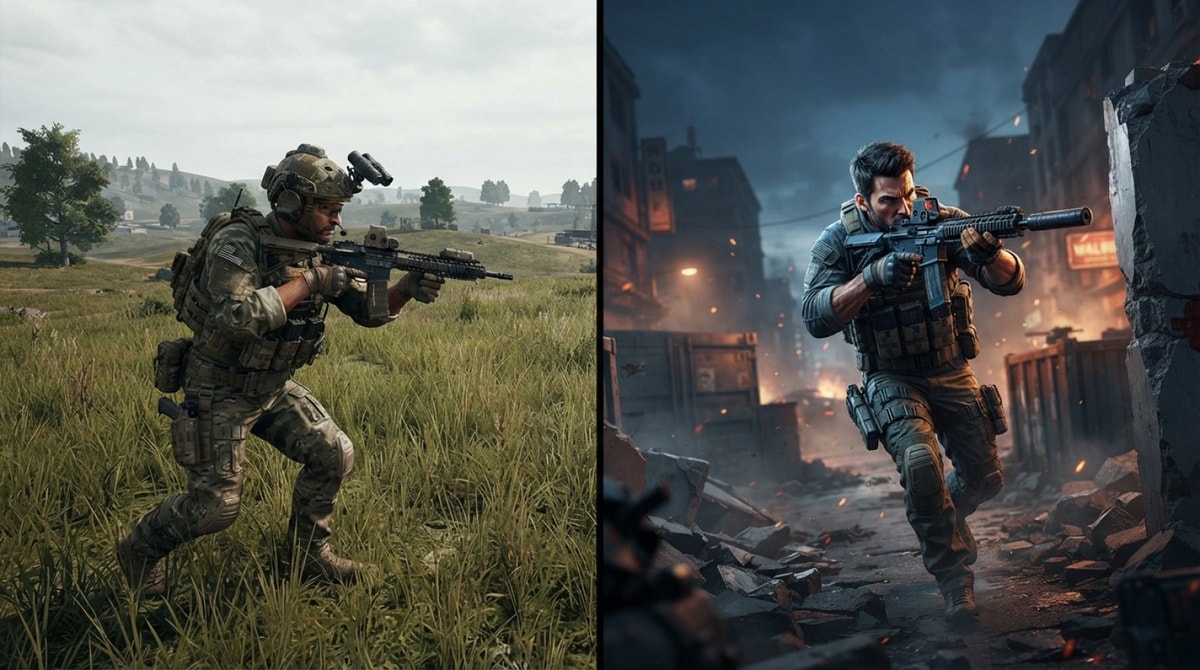
Choosing between PUBG Mobile and Call of Duty Mobile comes down to your personal preference for combat speed, map scale, and tactical depth. Both titles dominate the mobile multiplayer space on Android and iOS, yet they deliver drastically different shooting experiences. Understanding these key differences helps you select the game that matches your hardware and playstyle.
If you prefer tense survival, extensive travel across large open maps, and realistic ballistics, PUBG Mobile remains the classic pick. Conversely, if you want rapid respawns, twitch shooting mechanics, custom class loadouts, and varied arcade modes, Call of Duty Mobile provides a faster tactical rhythm.
This practical comparison breaks down gameplay mechanics, gunplay dynamics, hardware optimization, and storage requirements using published store specifications and technical profile data to help you decide which mobile shooter deserves space on your phone.
Quick Verdict and Key Decision Factors
For players seeking a direct recommendation on which shooter to install, the choice depends on whether you prioritize open-world survival or fast-paced match variety. PUBG Mobile centers its experience around eighty-to-hundred-player Battle Royale matches where spatial awareness, positioning, and circle management dictate survival. On the other hand, Call of Duty Mobile excels at quick five-minute Multiplayer sessions alongside its own operator-based Battle Royale mode.
Fast Decision Matrix
To help you compare the primary structural differences at a glance, consider how each title handles pacing, primary focus, and core mechanics based on store listing specifications:
- Primary Focus: PUBG Mobile prioritizes large-scale Battle Royale survival; COD Mobile balances classic 5v5 multiplayer with Battle Royale.
- Match Length: PUBG Mobile matches typically run 20 to 30 minutes; COD Mobile multiplayer matches last 5 to 8 minutes.
- Combat Pacing: PUBG Mobile features methodical distance engagements; COD Mobile focuses on immediate close-to-medium quarters combat.
- Movement Feel: PUBG Mobile uses realistic weight and stamina; COD Mobile features agile sliding, jumping, and operator skill abilities.
Key Highlights
Choosing the right title often hinges on your gaming routine and preferred session duration. PUBG Mobile rewards patience and team communication over long matches, making every gunfight feel consequential because dying usually ends your run. In contrast, Call of Duty Mobile offers constant action with frequent respawns in modes like Team Deathmatch, Domination, and Search and Destroy. If you only have ten minutes to play during a break, COD Mobile gets you into gunfights almost instantly.
Gameplay Mechanics and Gunplay Dynamics
The core shooting feel and movement mechanics create a distinct divide between these two mobile titans. PUBG Mobile emphasizes realistic physical simulation, requiring players to account for bullet drop, lead distance, and substantial recoil patterns during long-range engagements. Call of Duty Mobile leans toward responsive arcade action where mobility and quick aiming down sights dictate win rates in tight corners.
PUBG Mobile Realism
In PUBG Mobile, gunfights feel grounded and punishing. Weapon attachments significantly alter horizontal and vertical recoil patterns, meaning an unequipped assault rifle demands strict firing discipline and burst control. Vehicles play an essential role in traversing massive terrain maps like Erangel and Miramar, while inventory management requires balancing ammunition, health kits, armor levels, and tactical throwables. Victory relies as much on smart rotations and cover management as it does on raw aiming precision.
COD Mobile Fast Movement
Call of Duty Mobile provides aggressive movement options that allow players to slide around corners, jump through windows, and engage enemies with high mobility. Operator Skills add dynamic utility during matches, granting temporary power weapons like flamethrowers or ballistic shields. Loadouts are fully customizable before stepping onto the field, allowing you to tailor perks, secondary sidearms, and scorestreaks to your exact combat role.
Weapon Recoil & Handling
Weapon behavior differs noticeably between both titles. PUBG Mobile features heavier recoil impulse, forcing players to pull down on their screen or calibrate gyroscope controls to maintain accurate spray patterns at distance. Call of Duty Mobile weapons feature predictable recoil profiles and faster aim-down-sights (ADS) times. This design allows players to snap onto targets quickly and switch targets during frantic multi-kill engagements without struggling against excessive muzzle climb.
Device Performance and Optimization Across Hardware
Running a smooth frame rate is vital for competitive shooter success, and both games handle hardware resources differently. Based on published system requirements and developer optimization guidelines, each title provides flexible graphic sliders to maintain performance across budget and high-end smartphones.
Low & Mid-Range Performance
On budget and mid-range devices equipped with mid-tier processors, PUBG Mobile often achieves steady frame rates by offering aggressive scaling options, including reduced texture resolution and simplified shadow rendering. Call of Duty Mobile also features extensive graphics customization, allowing users to prioritize high frame rates over visual fidelity. Lowering graphic settings to smooth or medium while boosting frame rate settings ensures reliable target tracking during intense fire fights without severe thermal throttling.
High-End Visuals
Flagship devices capable of high refresh rate output unlock enhanced visual modes in both games. PUBG Mobile delivers detailed lighting, realistic water reflections, and extended view distances that make spotting distant prone enemies easier on large maps. Call of Duty Mobile on flagship hardware boasts sharp weapon textures, realistic particle effects from explosions, and smooth frame rate modes reaching up to 120 FPS on supported displays, creating an exceptionally responsive tactical shooter feel.
Storage and Update Sizes
Storage management is a crucial factor when installing these mobile shooters. Both titles offer modular download systems according to official app store technical notes. While the base installation files are moderate, downloading high-resolution texture packs, optional maps, audio assets, and extra cosmetic skins can expand total storage usage significantly past 15 to 20 gigabytes over time. Clearing unused resources within the in-game download managers helps keep device storage under control.
Battle Royale vs Multiplayer Game Modes
While both titles offer expansive battle royale modes and close-quarters arenas, their primary gameplay focus diverges significantly. PUBG Mobile built its massive following on large-scale survival combat, where positioning, rotation timing, and resource management dictate who claims the final victory. In contrast, COD Mobile treats classic multiplayer as its core foundation, delivering rapid respawns, tactical scorestreaks, and aggressive firefights across compact environments. Understanding how each title structures its rotational modes helps clarify which game delivers the match length and pacing you prefer during daily gaming sessions.
Battle Royale Scale & Maps
PUBG Mobile excels in wide-open battlefields like Erangel, Miramar, and Sanhok, where squad coordination and vehicle control determine mid-game survival. Matches frequently stretch to thirty minutes, demanding patient long-range spotting and precise sniper rifles. While COD Mobile includes Isolated and Blackout maps with specialized character classes and air-drop weapons, its battle royale matches generally feel faster and more arcade-like due to quick movement mechanics and operator abilities.
Classic Multiplayer Variety
When it comes to arena combat, COD Mobile delivers an extensive library of classic game modes. Players can jump into hardpoint control, search and destroy, frontline elimination, and team deathmatch without long queue times. PUBG Mobile offers arena training, payload modes, and team deathmatch inside its arcade sub-menus, but these modes function primarily as warm-up tools rather than the main competitive draw of the game.
Map Design & Density
Map architecture directly impacts combat frequency in both shooters. COD Mobile features legendary compact layouts such as Nuketown, Crash, and Firing Range, where combat occurs within seconds of spawning. PUBG Mobile focuses on expansive terrain featuring detailed urban complexes, rolling fields, and compound strongholds that require strategic navigation and long-distance line-of-sight awareness.
Monetization Fair Play and Cosmetics
Free-to-play competitive shooters rely heavily on in-game microtransactions to sustain live-service content, structural updates, and seasonal events. Fortunately, neither PUBG Mobile nor COD Mobile locks core gameplay advantages, base weapons, or essential character stats behind real-money paywalls. Both platforms adhere strictly to cosmetic monetization models, ensuring that raw skill, recoil control, and map awareness remain the deciding factors in every competitive firefight.
- Weapon Blueprints and Skins: Store purchases provide unique visual animated designs, custom iron sights, and kill-feed effects without modifying base damage statistics or bullet velocity.
- Character Outfits and Cosmetics: Seasonal cosmetics range from tactical military gear to high-concept thematic costumes that personalize player profiles without offering camouflage stat boosts.
- Battle Pass Progression: Free progression tracks unlock all newly introduced functional weapons and base scorestreaks, ensuring balance across all skill tiers.
PUBG Mobile Royale Pass
The seasonal Royale Pass in PUBG Mobile provides a structured reward track containing legendary outfits, vehicle skins, weapon finishes, and emotes. Players earn progression rank by completing weekly activity missions and match objectives. The system allows active players to earn enough premium currency through completion to fund the purchase of the subsequent season's pass.
COD Mobile Battle Pass
COD Mobile utilizes a 50-tier seasonal Battle Pass system that features cosmetic soldier skins, epic weapon blueprints, and custom charm items. Crucially, functional new guns are placed in the free tier of the pass, ensuring every player unlocks identical tactical gear regardless of spending habits. Completing tiers requires standard match completion experience points earned across any game mode.
Fair Play & Balance
Both titles implement strict anti-cheat detection systems and balanced weapon tuning patches based on official developer match analytics. Store weapon blueprints sometimes feature alternative iron sight geometries, but overall firearm attributes—including recoil patterns, fire rate, and hitboxes—remain identical between paid skins and base default models.
Final Decision and Recommendation for 2026
Choosing between these two premier mobile shooters ultimately comes down to your personal gameplay preferences and available time. If you enjoy tense survival dynamics, methodical tactical positioning, and thirty-minute strategic matches across massive maps, PUBG Mobile remains the definitive choice. Its emphasis on vehicle travel, long-range sniper duels, and drop-zone looting offers a deep battle royale experience.
On the other hand, if you prefer intense five-versus-five combat, fast respawns, customizable weapon gunsmithing, and quick ten-minute gaming sessions, Call of Duty Mobile provides unmatched arcade action. Whether you lean toward tactical battle royale survival or rapid multiplayer engagements, both games deliver exceptional mobile shooter experiences in 2026 without behind-the-paywall competitive advantages.


Comments
No comments yet. Be the first to share your thoughts.