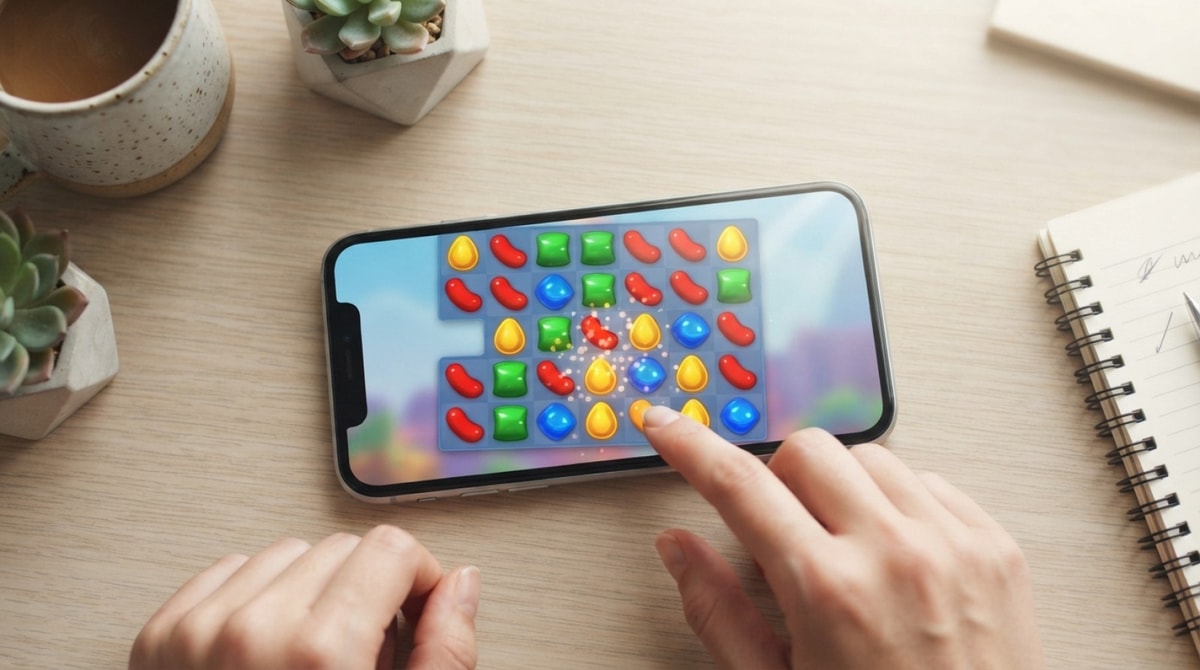
Candy Crush Saga remains immensely popular over a decade after its original launch because developer King mastered low-friction match-3 puzzle design. Rather than demanding hours of undivided attention or high-end smartphone hardware, the game fits naturally into short daily micro-sessions while offering immediate visual and audio satisfaction.
Its enduring market presence relies on accessible level design, cross-platform progress syncing across mobile devices and social accounts, and an endless stream of fresh content. By pairing simple puzzle mechanics with calculated psychological feedback loops, King maintains a dedicated player base across all age groups.
Why Candy Crush Saga Remains Popular in Mobile Gaming
The staying power of Candy Crush Saga in the mobile gaming space stems from an exceptionally low barrier to entry and cross-generational appeal. Unlike heavy strategy titles or competitive multiplayer games that demand complex controls and long learning curves, anyone can pick up a match-3 grid and understand the objective within seconds. This immediate clarity makes it attractive to casual players looking for short entertainment breaks during daily commutes or brief waiting periods.
Several structural elements support this persistent global audience over long periods:
- Cross-Platform Progress Syncing: Players can connect their progress through Facebook or dedicated game accounts, switching between mobile phones, tablets, and web browsers without losing earned boosters or map position.
- Constant Level Expansion: Regular live-service updates ensure that even long-time players who have completed thousands of puzzle levels always have new stages waiting for them.
- Minimal System Requirements: The lightweight engine runs reliably on older and low-budget hardware, making it available to millions of users worldwide without requiring recent flagship processors.
This combination of technical light weight and steady operational support ensures that the title remains visible on official app store charts year after year.
Psychological Mechanics Behind Candy Crush Engagement
Behind the bright candy visuals lies a carefully tuned feedback system engineered to reward player interaction continuously. Every successful move triggers immediate visual and auditory reinforcement, releasing satisfying sound effects, bright animations, and enthusiastic voiceovers whenever special candy combinations clear the board.
Sensory Feedback and Visual Polish
When players align four or five matching candies, the game creates wrapped candies, striped candies, or color bombs that clear whole rows in explosive chain reactions. The accompanying audio cues—such as "Delicious" or "Divine"—provide positive reinforcement that makes even minor tactical wins feel significant.
Variable Reward Schedules and Cascading Combos
The board layouts rely heavily on random piece drops, introducing unpredictable luck alongside active player decision-making. This variable reward structure mirrors classic psychological drives: players return because a single favorable move or retry can trigger a cascading combo that clears a complex board instantly.
Level Design and Life Limits Driving Daily Play
Candy Crush Saga balances difficulty curves and play session duration using energy constraints and adaptive puzzle layouts. Instead of allowing infinite play, the game caps player lives at five, deducting one life for every failed attempt at a level. This design choice prevents player burnout and creates an artificial scarcity that increases the perceived value of each attempt.
The Role of Life Capping in Player Retention
When a player runs out of lives, they face a clear choice: wait for the timer to replenish their lives over time, request assistance from social friends, or purchase extra attempts. This mandatory break transforms the game into a recurring daily habit rather than a single binge session, encouraging players to check back multiple times throughout the day.
Dynamic Difficulty Waves and Level Progression
Level design follows an undulating wave pattern where intense, high-friction levels are immediately followed by easier, highly satisfying boards. Completing a frustrating stage yields immense satisfaction, while the subsequent easy level re-establishes momentum and keeps players moving forward along the map.
Live Updates and Content Maintenance by King
Beyond core puzzle design, maintaining an active player base for over a decade requires a disciplined live-service framework. Developer King treats Candy Crush Saga as an ongoing operational platform rather than a static game release. Fresh content drops arrive on a predictable schedule, ensuring that hyper-dedicated players who reach the current end of the map always have new stages to tackle within days.
Seasonal Events and Community Competitions
To keep the gameplay experience dynamic between primary map expansions, King embeds temporary events and competitive features directly into the main map structure:
- Timed Competitive Tracks: In-game tournaments pair players against real-time leaderboards, offering limited-edition boosters for reaching high scores within a set timeframe.
- Seasonal Themes and Cosmetic Rewards: Visual overhauls and holiday-themed collection challenges provide fresh goals without altering familiar matching mechanics.
- Community Milestone Goals: Collaborative events encourage players to clear specific obstacle types collectively to unlock server-wide rewards.
Accessibility Features Across Demographics and Hardware
Accessibility is a fundamental driver of Candy Crush Saga's massive global reach. The core interaction—swapping two adjacent candies to match three or more of the same color—requires zero prior gaming experience or technical literacy. Anyone can grasp the primary mechanic within seconds of opening the first level, removing the friction that often deters non-gamers from digital entertainment.
Hardware Optimization and Touch Controls
The technical architecture and session design reinforce this universal accessibility across several key areas:
- Low Hardware Overhead: Lightweight graphics rendering allows the app to perform smoothly on budget smartphones and older devices without causing battery drain or overheating.
- Bite-Sized Level Lengths: Individual puzzle attempts typically last between two and three minutes, making the title ideal for filling short gaps during daily commutes or brief waiting periods.
- One-Handed Touch Control: The simple tap-and-swipe interface is naturally tailored for portrait mode on mobile screens, enabling easy play anywhere.
By prioritizing low hardware requirements and instant usability, King built a title that fits effortlessly into the daily routines of demographic groups far outside the traditional gaming audience.
Key Drivers Behind Candy Crush's Enduring Success
The long-term dominance of Candy Crush Saga is not an accidental viral anomaly. It is the result of meticulously balanced puzzle design, subtle psychological engagement loops, and low-barrier accessibility. By combining simple match-3 mechanics with a steady cadence of live updates, King created a scalable template for modern mobile titles.
Whether evaluated as a daily micro-break for casual players or as a masterclass in ongoing operational management, the game demonstrates how clear core rules and continuous content expansion can sustain player engagement across multiple generations of mobile hardware.
These live operations ensure that logging into the game feels distinct from week to week. By blending individual level progression with broader community competitions, the game gives players repeated reasons to return continuously.


Comments
No comments yet. Be the first to share your thoughts.